
Why Live Music Matters
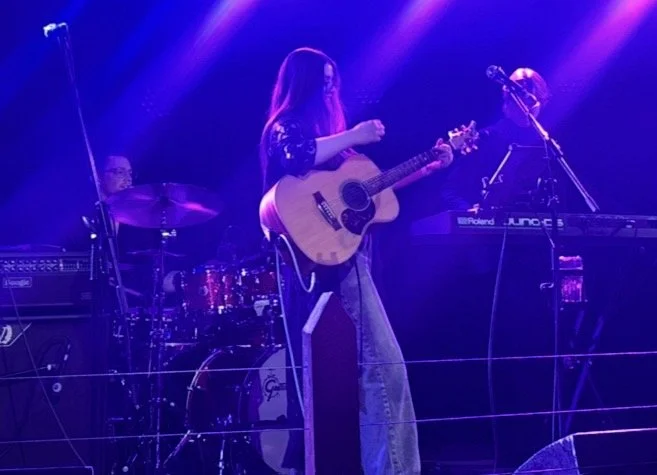
Why Live Music Matters
More than entertainment. It's connection, culture, community and the celebration of real musicianship.
There's something about live music that simply can't be replicated.
It's not just about the songs, the musicians or the entertainment. It's about connection. It's about being part of something bigger than ourselves, even if only for a few hours.
It's the way a song can transport you back to a moment in your life. The way a familiar melody can bring a room full of strangers together. The way music can make you laugh, cry, dance, remember or feel something you didn't even realise you needed to feel.
It's the goosebumps when someone sings a lyric that seems to have been written just for you. The spontaneous applause, the laughter between songs, the conversations with strangers and the memories made with friends.
In a world where so much of what we consume is recorded, edited, filtered and perfected, live music offers something increasingly rare.
Something real. Something human.
No two performances are ever quite the same. The energy of the room, the people, the atmosphere and the little moments between songs all become part of an experience that exists only once.
And that's what makes it special.
Remember When the Music Stopped?
I often think back to COVID and how suddenly so many of the things we took for granted disappeared.
We couldn't go out and see our favourite artists. We couldn't gather in pubs, festivals and concert halls. We couldn't dance together, sing together or share those experiences with the people we love.
And for those of us who make music, we couldn't do what we love most. Perform.
Stages went quiet, venues closed their doors, gigs were cancelled and musicians lost not only their income but an enormous part of their identity and connection to the world.
For me personally, performing has always been about so much more than standing on a stage and singing songs. It's about the exchange of energy between the musician and the audience. It's about sharing something that means something to me and watching it take on an entirely different meaning for someone else.
During COVID, that connection was taken away.
We found ways to adapt. We streamed performances, listened to recordings and connected through screens. Technology gave us incredible opportunities to keep music alive during a difficult time.
But it also reminded us that watching something on a screen isn't the same as being there.
You can't quite recreate the feeling of a room full of people singing together. You can't bottle the atmosphere of a great gig or the energy that passes between a performer and an audience.
Music might be something we can listen to alone, but experiencing it together is something entirely different.
And after everything we went through, I would have hoped we'd come away with a greater appreciation for the things that bring us together.
Real Music in an Increasingly Artificial World
We're living in an extraordinary time for music and technology.
Recording software, social media and now artificial intelligence have completely changed the way music is created, shared and consumed.
There are some wonderful things about that. Technology has made music more accessible than ever and opened doors for artists who might otherwise never have been heard.
But I also wonder whether we've become so accustomed to polished, edited and carefully curated performances that we're beginning to lose our appreciation for genuine musicianship.
Vocals can be pitch-corrected, instruments programmed, performances recorded over and over until they're flawless, and videos edited to show only the very best moments. Now AI can generate entire songs without a musician ever having performed them.
And social media presents us with a seemingly endless stream of perfection.
But here's what I love about live music.
When a musician stands on a stage in front of you, there's nowhere to hide.
No second takes. No editing out the mistakes. No carefully selected fifteen-second clip.
Just a person, their instrument, their voice and the skills they've spent years developing.
Of course, technology has its place in live performance too, but there's something particularly special about witnessing musicians who can genuinely deliver what you're hearing, right there in front of you.
A singer who can hold a room with nothing but their voice. A guitarist whose fingers seem to move effortlessly across the strings. A drummer who can feel the energy of the room and drive an entire band. Musicians who listen, respond and create something together in real time.
And behind those seemingly effortless performances are thousands of hours of practice, persistence, mistakes, learning and dedication.
Musicianship is a craft, and like any craft, it deserves to be recognised and valued.
Some of the most moving performances I've witnessed haven't been technically flawless. They've been honest.
A voice cracking with emotion, an unexpected harmony, a spontaneous solo or a song performed a little differently because of the energy in the room.
Perfection isn't necessarily what moves us. Authenticity is.
And as technology continues to evolve, I think those genuinely human experiences will become even more valuable.
Because when you watch a talented musician performing live, you're not just hearing the finished product.
You're witnessing the craft itself.
The Financial Reality of Live Music
There's another side to live music that I think deserves more conversation.
The money.
We often talk about supporting live music, but I wonder how many people really understand what it takes to keep it alive.
Behind every performance is an enormous amount of work the audience rarely sees.
Years of learning an instrument, developing a voice, writing songs, rehearsing, purchasing and maintaining equipment, travelling, promoting gigs, managing bookings, setting up and packing down.
The few hours you see on stage represent only a fraction of the work involved.
And while music is something we're incredibly passionate about, passion doesn't pay the bills.
Musicians have rent, mortgages, families, insurance, vehicles and all the same financial responsibilities as everyone else. Yet there's still sometimes an expectation that musicians should perform for very little money, for exposure or simply because they love what they do.
Of course we love what we do. That's why we've dedicated so much of our lives to it.
But loving your work doesn't make it any less valuable.
And it's not just musicians feeling the pressure.
Live music venues are businesses too. They have staff to pay, electricity bills, insurance, licensing, rent and countless other expenses.
When a venue books live entertainment, they're making a financial investment in the hope that people will come through the doors, buy a meal, enjoy a drink and spend an evening supporting the business.
If people don't turn up, that investment becomes difficult to justify.
When venues can no longer afford live music, they stop booking it. When venues stop booking musicians, opportunities disappear. And when those opportunities disappear, talented people who have spent years developing their craft are forced to find other ways to make a living.
Slowly, we lose something incredibly valuable.
I understand that life is expensive, and going out isn't always financially possible. But I think it's important to recognise that a thriving live music scene doesn't happen by accident. If you can’t afford a ticketed show just turn up at the local pub to watch the free event and buy one beer or even just liking and sharing gigs and events online, it all helps.
It exists because musicians, venues and audiences all play a part in keeping it alive.
Music Is Part of Who We Are
Long before streaming services, playlists and social media, people gathered to make music, tell stories, celebrate, grieve and connect.
Music has carried traditions between generations, given communities a voice and helped us make sense of the world around us.
And live music continues to do that today.
It's the local musician playing in the corner of a country pub. The young band performing their first gig. The singer-songwriter sharing something deeply personal. The community festival bringing families together. The wedding band playing a song that will forever remind two people of their special day.
These experiences become part of our stories.
In regional communities especially, live music plays such an important role in bringing people together. It's a reason to leave the house, catch up with friends, support a local business and feel connected to the place we call home.
And something I've learned over years of performing is just how much the audience matters.
People sometimes think of live music as something musicians provide and audiences simply receive. But it really is an exchange.
The atmosphere of a gig is shaped just as much by the people in front of the stage as the people standing on it.
A room full of people listening, dancing, singing along or simply enjoying themselves can transform a performance.
You can feel it.
Some of my favourite moments haven't been on the biggest stages or at the most impressive events. They've been the unexpected ones. The intimate gigs, the conversations afterwards, the person who tells you a particular song meant something to them, or the room that suddenly comes alive when everyone starts singing.
Those are the moments that stay with me.
And they're the moments that remind me why live music matters.
Keeping Live Music Alive
After years of performing, my relationship with music has grown and changed.
I've experienced the incredible highs, the exhaustion, the sacrifices, the financial realities and the challenges of trying to build a life around something you love.
And while I may not always want to be on stage as often as I once did, my appreciation for live music has never diminished.
If anything, it's deepened.
Because I understand what goes into it. I understand the courage it takes to stand in front of people and share something of yourself. The work that happens behind the scenes, the sacrifices that are made and the uncertainty that comes with choosing a creative path.
But I also understand the reward.
That extraordinary feeling when the music, the musicians and the audience all come together and something just clicks.
For a moment, nobody is thinking about tomorrow's responsibilities, their overflowing inbox or everything happening in the world.
They're simply there.
Listening. Feeling. Connecting.
And perhaps that's one of the most important things music gives us.
A chance to step away from the noise of everyday life and remember what it feels like to be human, together.
So the next time you see a local musician performing, a band advertised at your favourite pub or a festival happening in your community, consider going along.
Not out of obligation or guilt, but because there's something wonderful waiting to be experienced.
Support the artists. Support the venues. Support the people behind the scenes who make it all possible.
Because live music is not just a luxury or background entertainment.
It's culture. It's community. It's livelihood. It's storytelling. It's connection.
And in a world where almost anything can be edited, generated or made to appear real, I think the value of genuine human connection and musicianship is something worth protecting.
Music brings us together. But it takes all of us to keep live music alive.